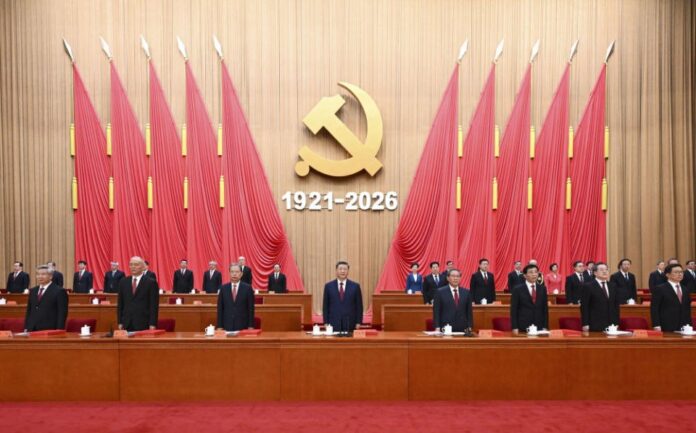
In modern political history, there are few political parties that have been able to maintain a national leadership role continuously for more than a century and at the same time lead a country from “poverty, weakness and isolation” to become a world economic and technological powerhouse.
The 105 years (July 1, 1921–2026) of the development of the Communist Party of China is not only the history of the growth of a political party, but also a great transformation of the world’s most populous country. From a country that had suffered invasions and civil wars, China has become the world’s second largest economy and a leader in infrastructure, technology, and poverty reduction.
After the founding of the People’s Republic of China on October 1, 1949, China, under the leadership of the Communist Party of China, led by Mao Zedong, began to lay the foundation for national development. Especially after the reform and opening-up policy led by Deng Xiaoping on December 18, 1978, the Chinese economy has grown rapidly.
China’s GDP has increased from approximately US$150 billion in the late 1970s to US$19.6 trillion by the end of 2025. China has become one of the world’s largest manufacturing centers and a major force in driving global economic growth.
The most widely recognized achievement is poverty reduction. Over the past 40 years, China has lifted more than 800 million people out of poverty, accounting for about 70% of global poverty reduction over the same period. This achievement has resulted from long-term planning, rural development, investment in infrastructure, and the creation of economic opportunities for its people. This experience has shown that development is truly meaningful when people directly benefit from economic growth.
In infrastructure, China has built a network of expressways, high-speed railways, ports, and airports on a scale rarely seen in the world. China currently has about 50,000 kilometers of high-speed railways, the largest in the world. These infrastructures have helped strengthen urban-rural connections, boost trade, and improve national economic efficiency.
In addition, China has also transformed from a labor-intensive country to one based on innovation and high technology. Advances in artificial intelligence, electric vehicles, robotics, next-generation communication technology, and space have made China a major player in global technological competition. The Tiangong space station and the lunar rover are emblematic of the shift from technology receiver to technology creator and transferor.
What makes the Chinese Communist Party’s experience so appealing to political parties and intellectuals around the world is its perfect integration of state governance, planning, long-term strategy, and the use of market mechanisms to drive development. This experience has been dubbed the “Chinese development model” by international scholars, which has become a topic for study and lessons learned in many countries.
On the international stage, China, led by Xi Jinping, has expanded closer cooperation and brought greater benefits to the world through the 13-year-old Belt and Road Initiative, which has connected many countries in Asia, Africa, Europe and Latin America. The initiative has led the world to build a community of shared future for mankind with four more global initiatives as strong pillars, and has supported multilateralism under the UN Charter, and jointly safeguarded the planet, our common home, by more actively valuing the ecological civilization with China as a model.
Overall, the 105 years of development of the Communist Party of China have demonstrated the ability to lead a great national transformation. From poor and weak countries, China, which has been increasingly positioned as a powerful economic, technological and commercial power in the world, offers important lessons that can be learned: having a long-term vision, continuous reform, focusing on people, and investing in science, technology and infrastructure.
Although China’s experience is not a one-size-fits-all formula, it has become a valuable source of lessons for political parties and countries in finding development paths that can be adapted to the specific circumstances of their own countries.
By: Dr. Chea Monirith | President of the Cambodia-China Development Research Association
This site is translated by Google Translate™