
Pakistan’s recent claims of an imminent water crisis in the Indus Basin and attributing the changes in river flow to upstream activities are completely unfounded when examined against hydrological data, reservoir records and Pakistan’s own operational realities.
A closer examination of the evidence suggests a very different picture: not a systemic water shortage, but rather a large inflow exceeding the large outflow downstream and long-standing structural limitations in water management.
The most striking feature of the 2025 hydrological cycle is the large water surplus during the Kharif – (April to September). According to data from Pakistan’s Indus River System Authority (IRSA), the actual inflow is around 122.36 MAF (Million Acre-Feet), which is almost 18% higher than the expected inflow (around 104 MAF) for the 2025 Kharif season. On the other hand, the abundant rainfall across the river basin has reduced the demand for irrigation water and reduced the pressure on water allocation to individual provinces. These conditions are in stark contrast to the claims of severe water shortage or any arrangement to create water shortage from upstream.
Even more contradictory to the claim of water shortage is the huge amount of water that has overflowed the Kotri Dam into the Arabian Sea. During the Kharif season of 2025, the amount of water flowing over the Kotri dam was nearly 30,848 MAF, which is about 71% higher than the average of the last five years (which was only 18,034 MAF). The large amount of water flowing downstream into the sea (about 3.6 MAF) continued to occur even during the Rabi (October to March) season of 2025, which is the low flow season.
If the river basin were to experience severe water shortage due to upstream intrusion, such a large amount of water would not have been released unused and allowed to flow into the sea. Instead, the data clearly shows the shortcomings of the flood management infrastructure and the efficiency of water allocation in the lower river basin.
The state of the reservoirs during the same period also weakens the claim of a hydrological crisis. As expected, the Kharif season began with low storage levels, which is normal unless the reservoirs are designed for carry-over storages.
Then, the combination of high inflows and flood events quickly filled the main reservoirs. By September 2025, storage levels had risen to nearly 99% of storage capacity, creating a stronger water availability situation for the 2025–26 Rabi season.
The outlook for the 2026 Kharif season also remains stable. The projected rim-station inflow of about 103.3 MAF for the 2026 Kharif season, combined with an estimated reserve storage of about 3.3 MAF, which is higher than last year and above the long-term average, suggests that the basin is entering a new cycle of hydrological relief rather than crisis.
At the same time, Pakistan’s recent attempts to show that changes in the Chenab River are evidence of upstream recycling ignore both the hydrological reality and the routine operation of run-of-the-river hydropower projects.
The river flow at downstream locations such as Marala is naturally influenced by seasonal patterns of glacial melt in the Himalayas. Changes in winter ice cover, slow melt, or cold temperatures in spring all naturally affect early-season flow levels. Such variations are a normal feature of the Himalayan river system and cannot be interpreted as evidence of deliberate interference.
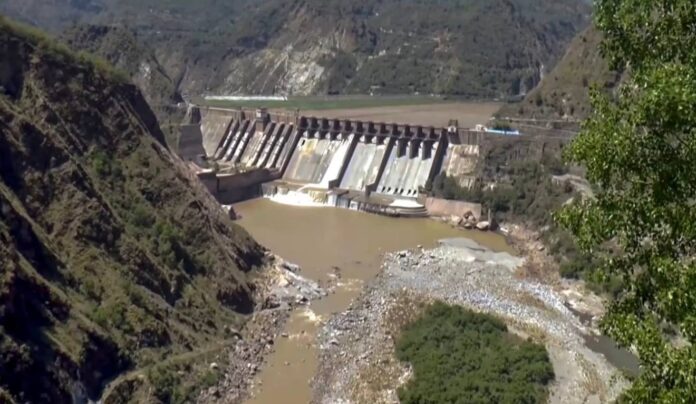
The operational dynamics of hydroelectric projects such as the Baglihar project have also been repeatedly misinterpreted. Reservoir management in run-of-the-river hydropower systems requires variable discharges associated with silt washing, necessary maintenance, upgrading of hydropower, technical safety considerations, and flood management protocols.
Sediment management is particularly important in Himalayan rivers that are heavily silted. Therefore, temporary operational adjustments during the sludge washing or maintenance cycle are an indispensable part of the project process. Importantly, the Baglihar project has already undergone extensive international scrutiny.
Pakistan itself has invoked the dispute settlement clause of the Indus Waters Treaty, which led to the appointment of a Neutral Expert under Article IX and Annex F. The 2007 independent expert ruling upheld the project’s key structural and operational parameters, overruling most objections to the project’s pondage and freeboard.
The project was found to be fully compliant with the treaty provisions governing run-of-the-river hydropower development.
Furthermore, there is no evidence of any actual downstream damage caused by the alleged changes in water flow. The allegations are largely based on selective imagery, isolated observations, and media narratives rather than rigorous hydrological analysis to determine the true cause of economic damage or measurable agricultural impacts.
No concrete evidence has been presented to link operational changes at upstream projects to long-term negative impacts downstream.
Furthermore, allegations of politically motivated manipulation overlook an important fact: any deliberate interference in hydropower operations not only creates direct economic losses for the upstream operators themselves through reduced efficiency of power generation, but can also have long-term impacts on the plant.
A single cycle of sludge washing during the monsoon season at Baglihar Dam can result in an estimated loss of around 150 million units of electricity and lost revenue.
Such washing operations are carried out by operators for purely technical and maintenance reasons. It is difficult to accept the claim that there is deliberate disruption when these operational options reduce energy production and cause financial losses at the same time.
In summary, all the evidence points to a clear conclusion. The Indus Basin has recently experienced higher than expected inflows, significant downstream discharges, rapid recovery of reservoir levels, and stable projections into the future. The variations in river discharge remain within the scope of natural hydrological processes and standard reservoir operations.
The bigger challenge facing the basin lies not in the speculative claims of upstream water cut-offs, but in unresolved internal structural issues, including: limited storage capacity, siltation pressures, inefficient use, and water management capacity. Blaming these internal management shortcomings on external factors by creating a fictional story of water scarcity does not help address the real long-term challenges facing the basin.
By Atul Jain, former Chairman, Central Water Commission
This site is translated by Google Translate™