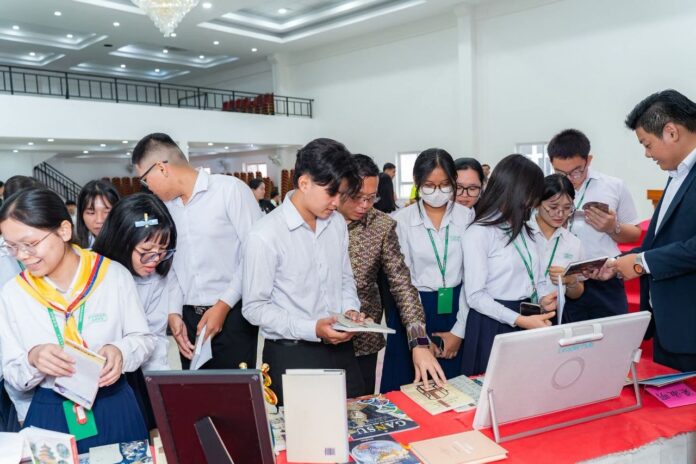
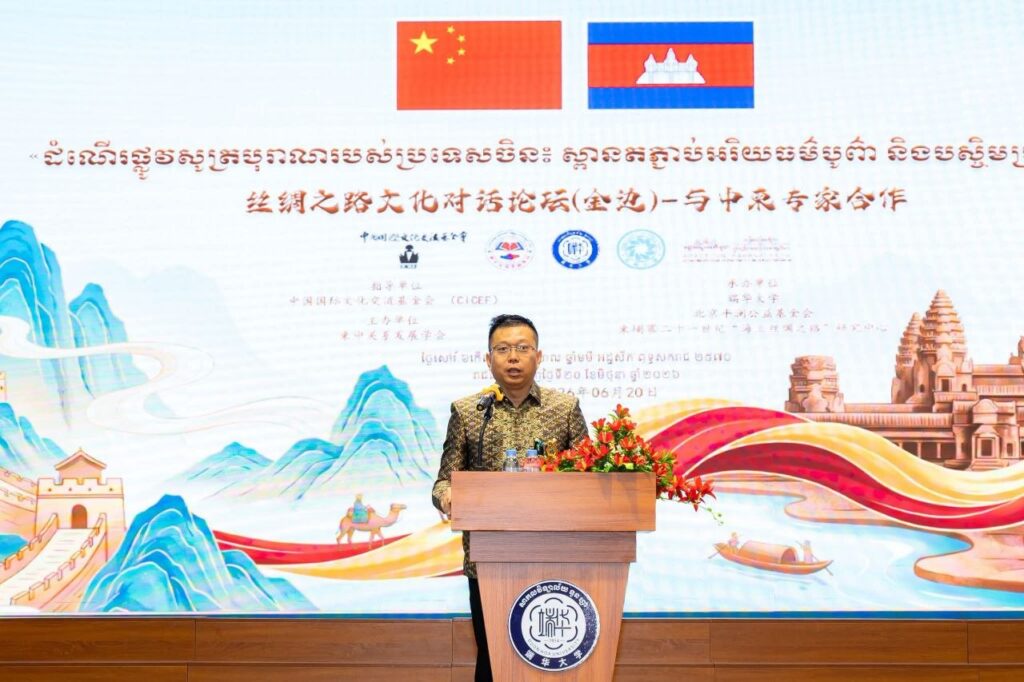
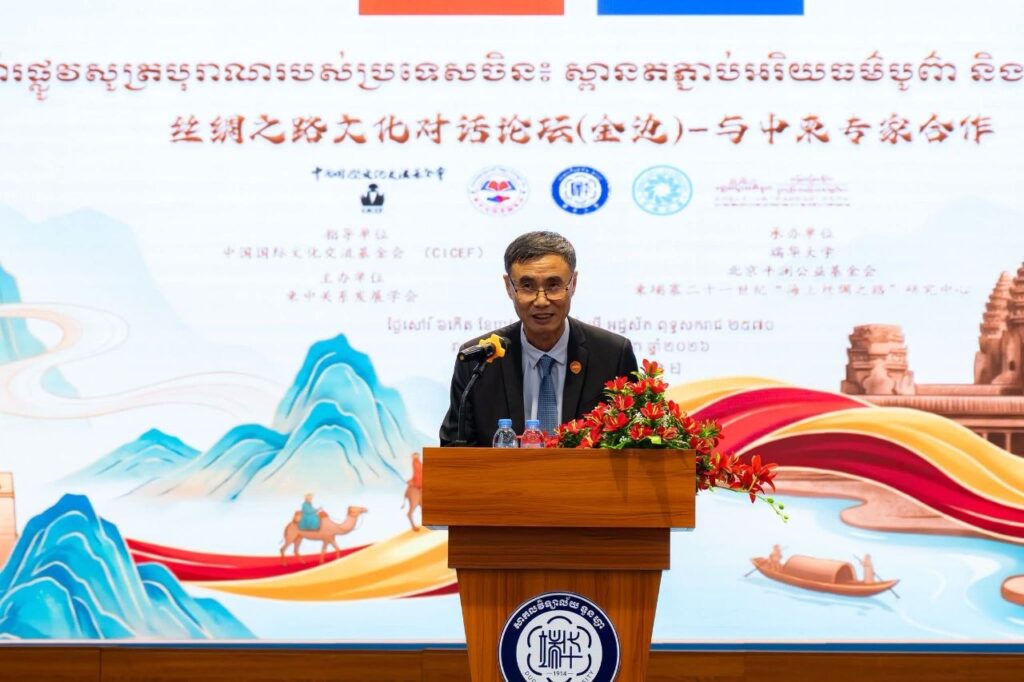
Phnom Penh: On June 20, 2026, Tuanfa University, in collaboration with the China Foundation for International Cultural Exchange, the Cambodia-China Development Research Association, the China Peaceland Foundation, and the 21st Century Maritime Silk Road Research Center, jointly organized a lecture program under the theme “China’s Ancient Silk Road Journey: A Bridge Connecting Eastern and Western Civilizations” with the participation of more than 60 leaders, professors, students, researchers, and distinguished guests. The program is designed to raise awareness of the history, role, and influence of the ancient Silk Road in connecting civilizations, economies, trade, and culture between the East and the West.
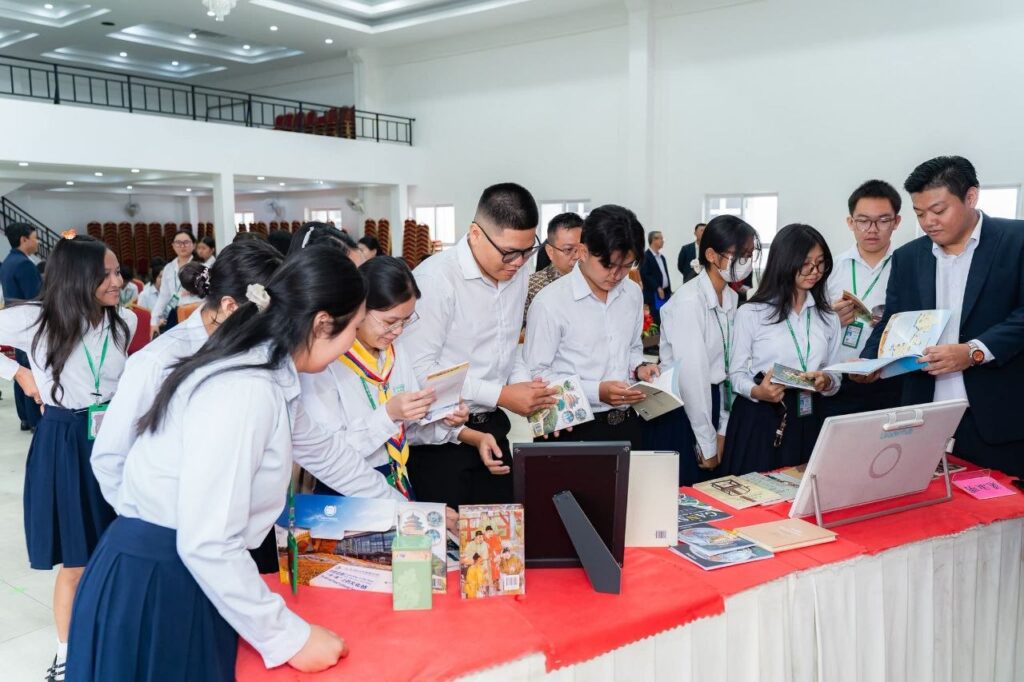
Through two short films, Dr. Naing Chantarith, Director of the 21st Century Maritime Silk Road Research Center Explained that the ancient Silk Road was established more than 2,000 years ago, originating from Xi’an, China, passing through many countries in Central and East Asia to the Italian Peninsula in ancient times, with a total length of 6,440 kilometers, in the spirit of being a road for friendly relations rather than a trade route. In the process of exchanging friendships between the Chinese people and the people of other countries along the Silk Road, the spirit of the Silk Road is to express peace, cooperation, openness, integration or inclusiveness, mutual learning, and mutual benefit and win-win.
Through a presentation with the help of short films, Yu Hetao, President of Tuanfa University, a Chinese, presented the history of the ancient Silk Road, which connected China with Europe and other regions more than 2,000 years ago. He said that the Silk Road was not just a route for transporting goods and trade, but also a path of friendship, exchange of culture, knowledge, science and civilization between people of different regions. The Silk Road has made a significant contribution to the establishment of close ties between the East and the West, which are the basis of mutual understanding and peace.
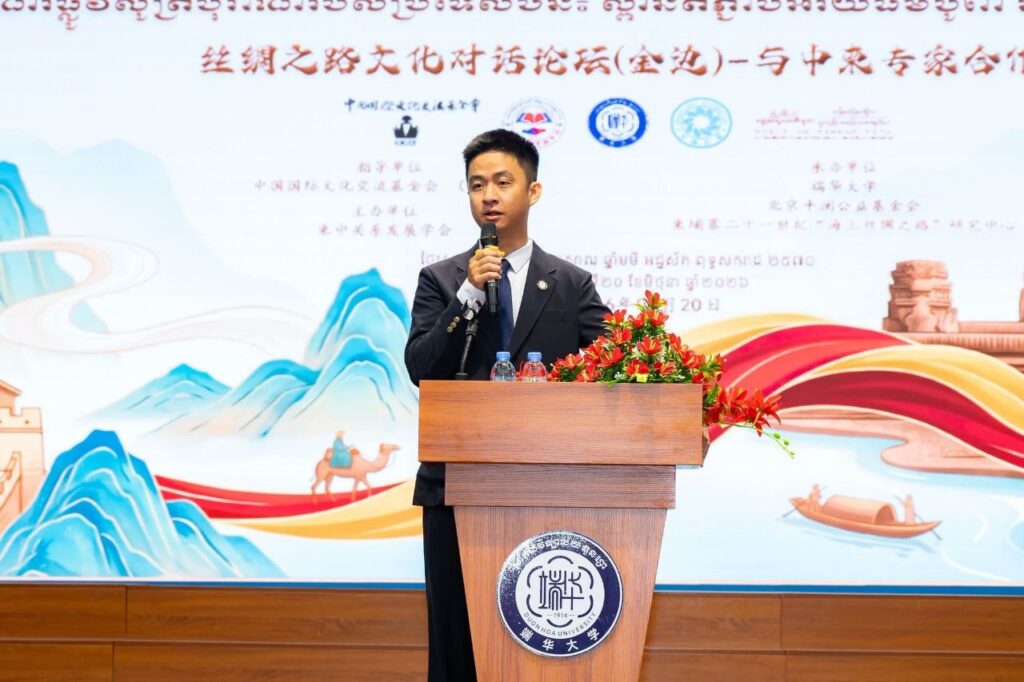
As a goodwill ambassador for the Silk Road, Dr. Chea Monirith detailed the history and the development of the ancient Silk Road, starting from the origins of the Silk Road during the Han Dynasty, the journeys of merchants and missionaries along land and sea routes, and the role of the Silk Road in spreading culture, religion, technology, and civilizational exchange between Asia, Europe, and Africa.
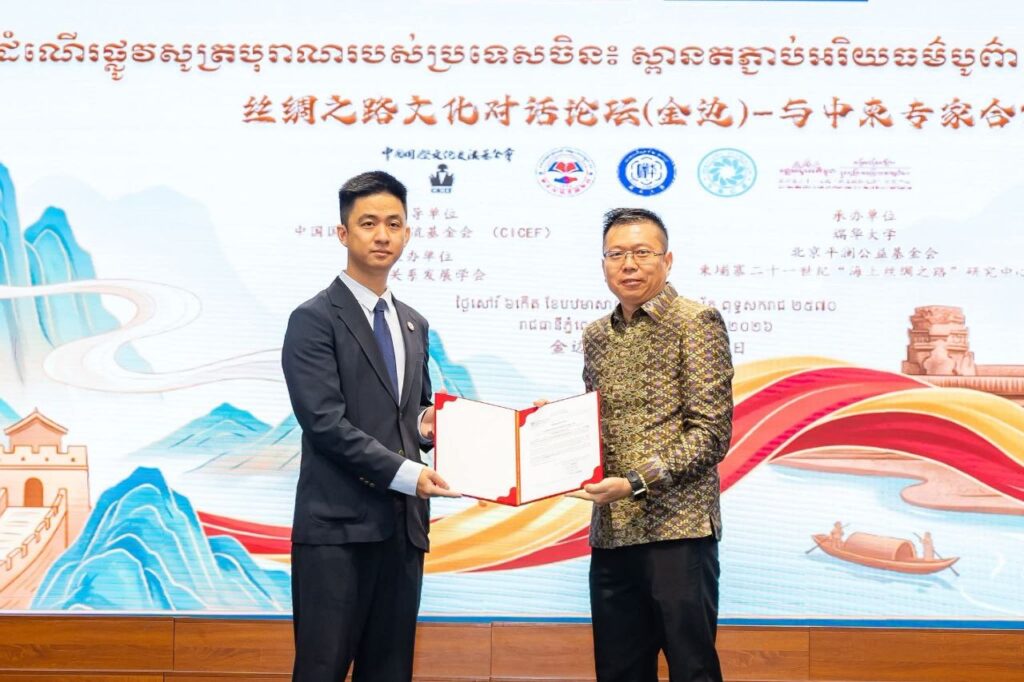
Mr. Lam Kuy The vice president of Tuanfa University said that the lecture provided valuable knowledge about the history and meaning of the ancient Silk Road, and demonstrated the continuation of the Silk Road spirit through the Belt and Road Initiative. Over the past 13 years, the “Belt and Road” initiative, which has its roots in the ancient Silk Road for thousands of years, has continued its spirit of openness and openness, allowing all countries to become partners and jointly implement it through comprehensive consultations, and everyone should benefit from this initiative.
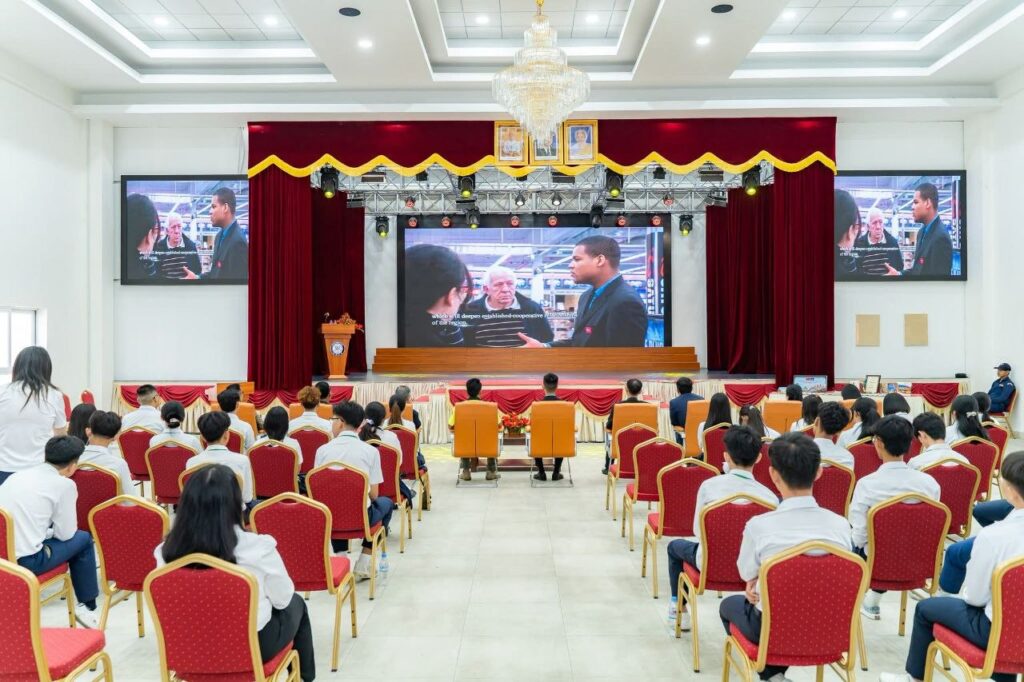
Mr. Chheak Chanlong, a first-year student at Tuanfa University, was impressed that the program contributed to strengthening the students’ and participants’ understanding of the importance of connecting civilizations, respecting cultural diversity, and building international cooperation to jointly promote peace, development, and common prosperity.
Throughout the morning program, Ms. Nget Mana, a 10th grader at Tuanfa School, noted that the spirit of the ancient Silk Road, which is based on peace, cooperation, openness, mutual learning, and common interests, Still important for the world today.
This site is translated by Google Translate™