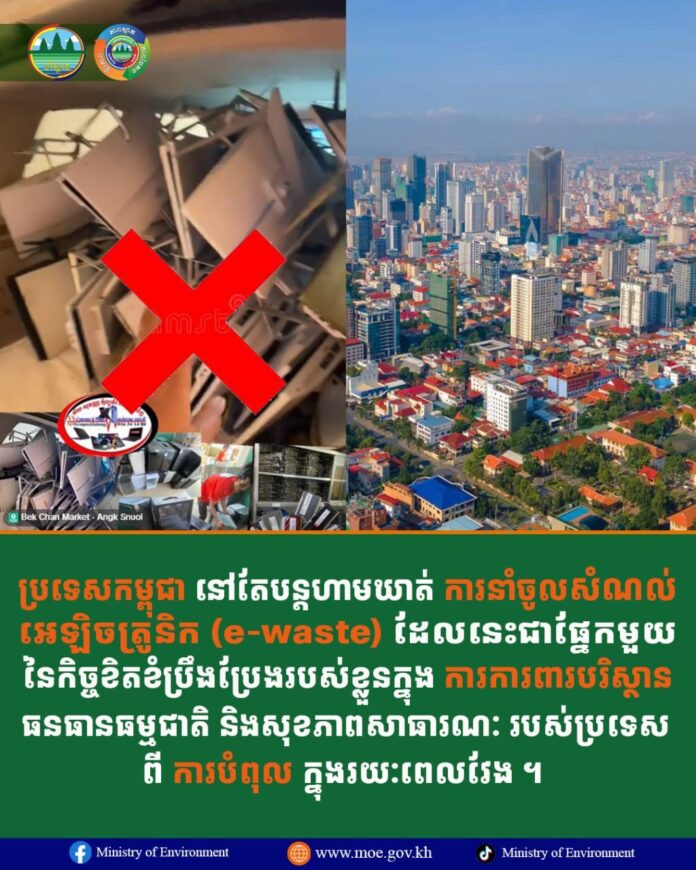
Phnom Penh: Cambodia continues to ban the import of electronic waste (e-waste), as part of its efforts to protect the country’s environment, natural resources and public health from long-term pollution.
According to the Ministry of Environment’s Facebook page on June 29, 2026, e-waste includes obsolete and discarded electronic devices such as computers, televisions, mobile phones, printers, household appliances, batteries and other electrical appliances.
Although some valuable materials can be extracted from e-waste, only about 9 percent of its components can generally be recycled for economic gain. The remaining materials require advanced processing, skilled processing technology, and environmentally sound disposal, all of which are expensive and highly technical.
Improper handling of e-waste can release hazardous substances into the soil, groundwater, rivers, and atmosphere, causing long-term environmental pollution and posing risks to human health. When pollution occurs, restoration is often expensive, and in some cases, the damage may be irreversible.
The Ministry of Environment has stressed that Cambodia will not allow the country to become a destination for e-waste from abroad and will continue to enforce laws prohibiting illegal imports.
At the same time, the ministry has acknowledged that domestically generated e-waste is increasing due to the increasing use of technology. Therefore, a special national effort is being considered to strengthen the country’s capacity to collect, manage and recycle domestic e-waste effectively and efficiently, to ensure that e-waste generated in Cambodia is handled safely and minimizes environmental risks.
The ministry said that pollution prevention remains the most effective method to protect Cambodia’s clean environment and protect the country’s natural resources for future generations.
This site is translated by Google Translate™