
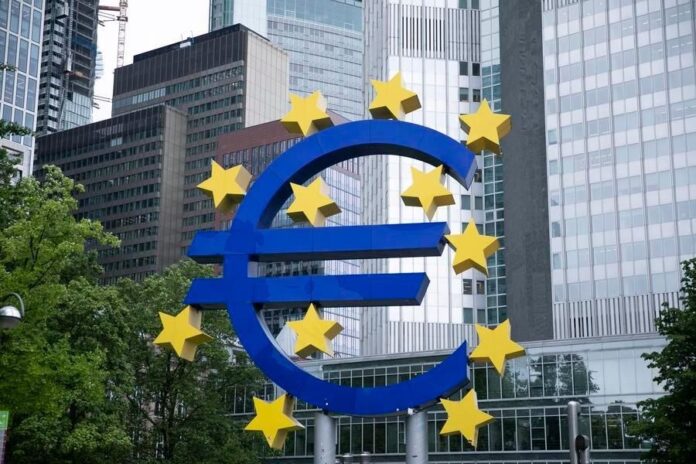
BRUSSELS: A senior European Central Bank (ECB) official said the Middle East crisis has increased uncertainty and is affecting both inflation and growth in the eurozone.
Speaking to the European Parliament’s Economic and Monetary Affairs Committee in Brussels, ECB Governing Council member Philip Lane said the Middle East peace deal was welcome but the situation remained fragile with risks of a backlash or a resurgence of tensions.
“The full impact of the war for inflation and medium-term growth will depend on the intensity and duration of the energy price volatility and on the size of its indirect and second-round effects,” he added.
According to his assessment, the war in the Middle East is having an impact on economic activity. Services activity weakened more markedly than manufacturing, while support from precautionary stockpiling appeared to be fading as new orders stagnated in May.
The labor market remains resilient, with the unemployment rate near a historic low of 6.3 percent in April, but the ECB official noted that labor demand has weakened further and both firms and households expect the labor market to weaken further.
Edited by Chhouk Bora
This site is translated by Google Translate™